
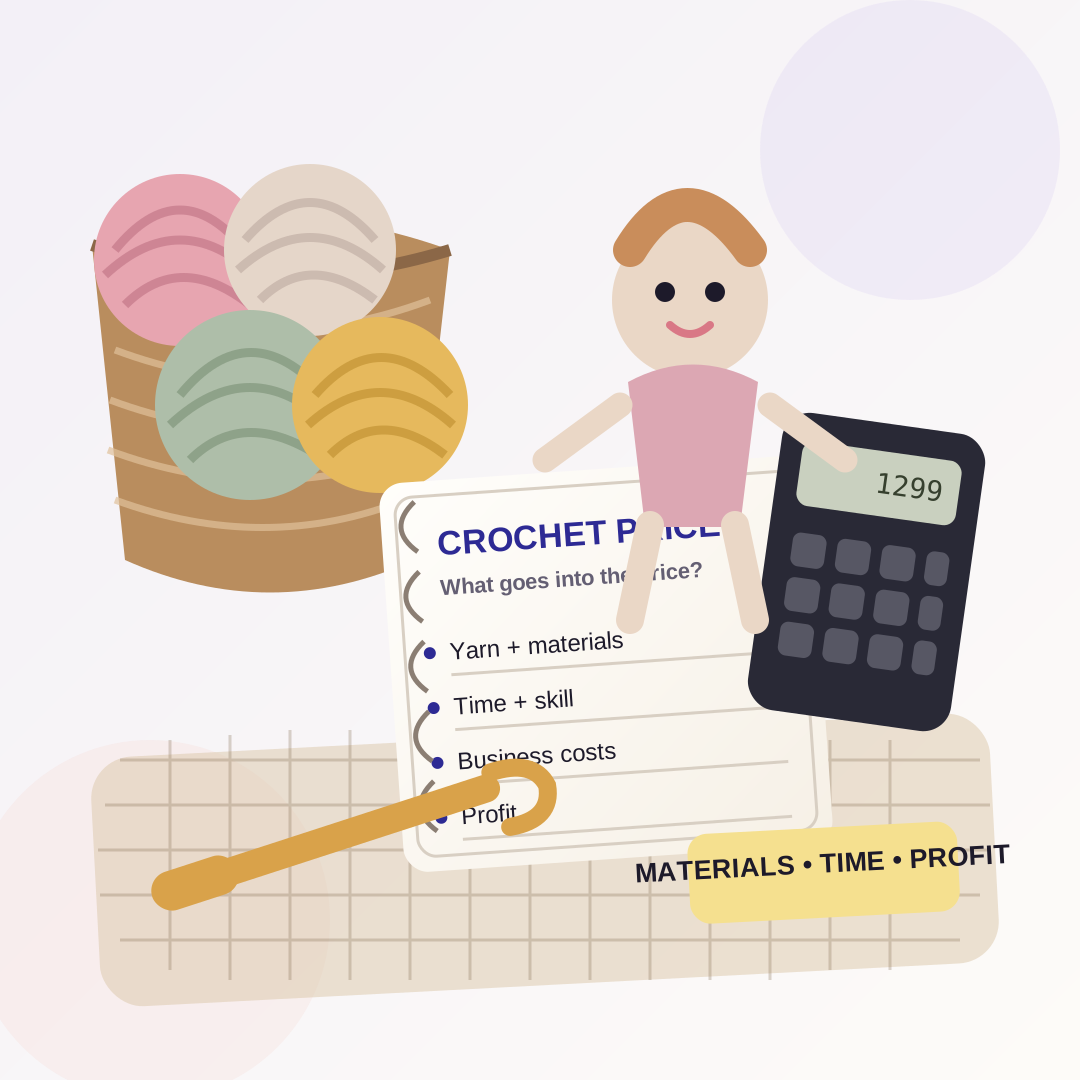

Pricing a crochet product can be harder than making it. You know what the yarn cost, you know roughly how long you worked, and then comes the uncomfortable question: What should I actually charge?
If you are selling crochet in India, there is another layer to the problem. Customers may compare a handmade item with factory-made products, while your real cost includes materials, hours of work, packaging, payment fees and the time spent preparing the order.
The goal of pricing is not to find one magical number. It is to build a price you can explain, repeat and adjust when your costs change.
Material Cost + Labour Cost + Business Costs + Profit = Selling Price
Calculate your crochet price →
1. Start with the material cost
Write down everything that actually goes into the finished product. That can include yarn, stuffing, safety eyes, buttons, thread, zips, hooks or accessories used up for the project, labels and packaging.
For yarn, try to calculate the amount actually consumed rather than automatically charging the customer for an entire skein.
For example, if a ₹350 skein contains enough yarn for several small projects and you use approximately half of it, the yarn component for that project is about ₹175.
For small products, these little calculations matter because the difference between a ₹50 material cost and a ₹150 material cost can change your final selling price significantly.
2. Pay yourself for the time you spend crocheting
This is the part that is most often left out.
Crochet is labour. Your hands are doing the work, and your time has a value even if you are working from home.
Suppose a product takes 4 hours and you choose a working rate of ₹150 per hour.
4 × ₹150 = ₹600 labour
Your own hourly rate may be higher or lower. The important thing is to choose it deliberately instead of treating your time as free.
3. Include the costs that are easy to forget
Not every business cost becomes part of the physical product, but those costs still have to be paid.
- Packaging and tags
- Electricity and workspace expenses
- Tools and equipment
- Website and software costs
- Payment gateway fees
- Marketplace or platform fees, where applicable
- Marketing and photography
- Shipping supplies and handling costs
- Wastage, mistakes and small replacement costs
You do not need to make your pricing spreadsheet unnecessarily complicated. The key is to make sure these costs are accounted for somewhere rather than silently coming out of your profit.
4. Add profit after calculating your real cost
Once you know what it costs to make and sell the item, you can decide how much profit you need.
| Component | Example |
|---|---|
| Materials | ₹250 |
| Labour: 4 hours × ₹150 | ₹600 |
| Other costs | ₹100 |
| Total cost | ₹950 |
| Profit | ₹250 |
| Selling price | ₹1,200 |
This is only an example. Your own yarn cost, production time, hourly rate, overhead and desired profit will be different.
Markup and margin are not the same thing
This is worth understanding before you use any pricing calculator.
Markup is normally calculated on your cost. Margin is calculated as a percentage of the final selling price.
For example, if something costs ₹100 and you add a 25% markup, the selling price is ₹125. But ₹25 is 20% of the final ₹125 selling price, so the margin is 20%.
If your calculator asks for a markup, enter a markup. If a marketplace or business plan gives you a target margin, do not automatically treat the two percentages as interchangeable.
What if another crochet seller is charging less?
Do not automatically copy the lower price.
Two products can look similar while having very different economics. One maker may work faster, use different materials, have lower overhead, sell directly to repeat customers, or accept a smaller return for their time.
Instead of starting with “Why are they charging ₹500?”, start with:
“What does this product actually cost me to make and sell?”
That gives you a number you can work with. You can then decide whether to simplify the design, change materials, adjust your production process, position the product differently or accept a lower profit for a specific reason.
A crochet pricing chart can be useful — but only as a starting point
A pricing chart can help you organise products into broad groups such as keychains, small accessories, dolls, bags, garments and larger home projects.
But a fixed chart should not replace product-level costing.
A crochet keychain that takes 20 minutes and a detailed amigurumi doll that takes 6 hours should not be priced from the same rule simply because both are “crochet products.”
Use a chart to compare your own products. Use actual costing to decide what each product needs to earn.
How to price custom crochet orders
Custom work deserves extra care because the customer may request a colour, size, character or design that is not part of your normal production flow.
For a custom order, consider:
- Material cost
- Estimated making time
- Design or planning time
- Any additional sampling or changes
- Packaging
- Shipping-related costs
- Your desired profit
It is also sensible to confirm the design and price before starting a made-to-order piece.
If you have an idea for a personalised handmade product, you can start a custom order with StickyKnots.
Use a calculator instead of doing the same maths every time
If you make several products, manually repeating the same calculations becomes tedious. A dedicated crochet price calculator can turn the process into a repeatable workflow.
StickyKnots’ calculator lets you work with materials or supplies, hours, cost per hour, business expenses and markup so you can arrive at a practical starting price for a crochet project.
FREE TOOL
What should your crochet project cost?
Put your real materials, time and business costs into the StickyKnots calculator and work out a price instead of guessing.
Before you publish your next crochet product
- Have I included all important materials?
- Have I included the time spent making and finishing it?
- Have I accounted for packaging and selling costs?
- Do I know whether I am using markup or margin?
- Does the final price leave room for profit?
- Can I explain the price if a customer asks?
Good handmade pricing is not about making every product expensive. It is about knowing what the product costs, understanding what the customer is buying, and making an intentional decision about what the work needs to earn.
Crochet Price Calculator →
Shop Crochet Yarns →
Custom & Personalised Orders →
For Makers →
Frequently asked questions
What is the easiest way to price a crochet product?
Start with materials, add the value of your working time, account for relevant business costs, and then add the profit you need. A calculator makes this easier to repeat across products.
Should I charge for crochet labour?
Yes. If the product is being sold as a business, the time required to make it is part of the cost of producing it.
Should I use the same hourly rate for every crochet product?
You can use a consistent baseline, but you may choose different rates for different types of work, skill levels or business channels. What matters is that the rate is deliberate and sustainable for your situation.
Is crochet pricing in India different from other countries?
The basic costing logic is the same, but material prices, labour expectations, platform fees, shipping, taxes and customer purchasing behaviour can differ by market. For an Indian seller, use your actual costs in INR rather than copying a foreign pricing chart.